 English only
Kungsleden in Winter: Ski Pulka and Paragliding in the Heart of Swedish Lapland
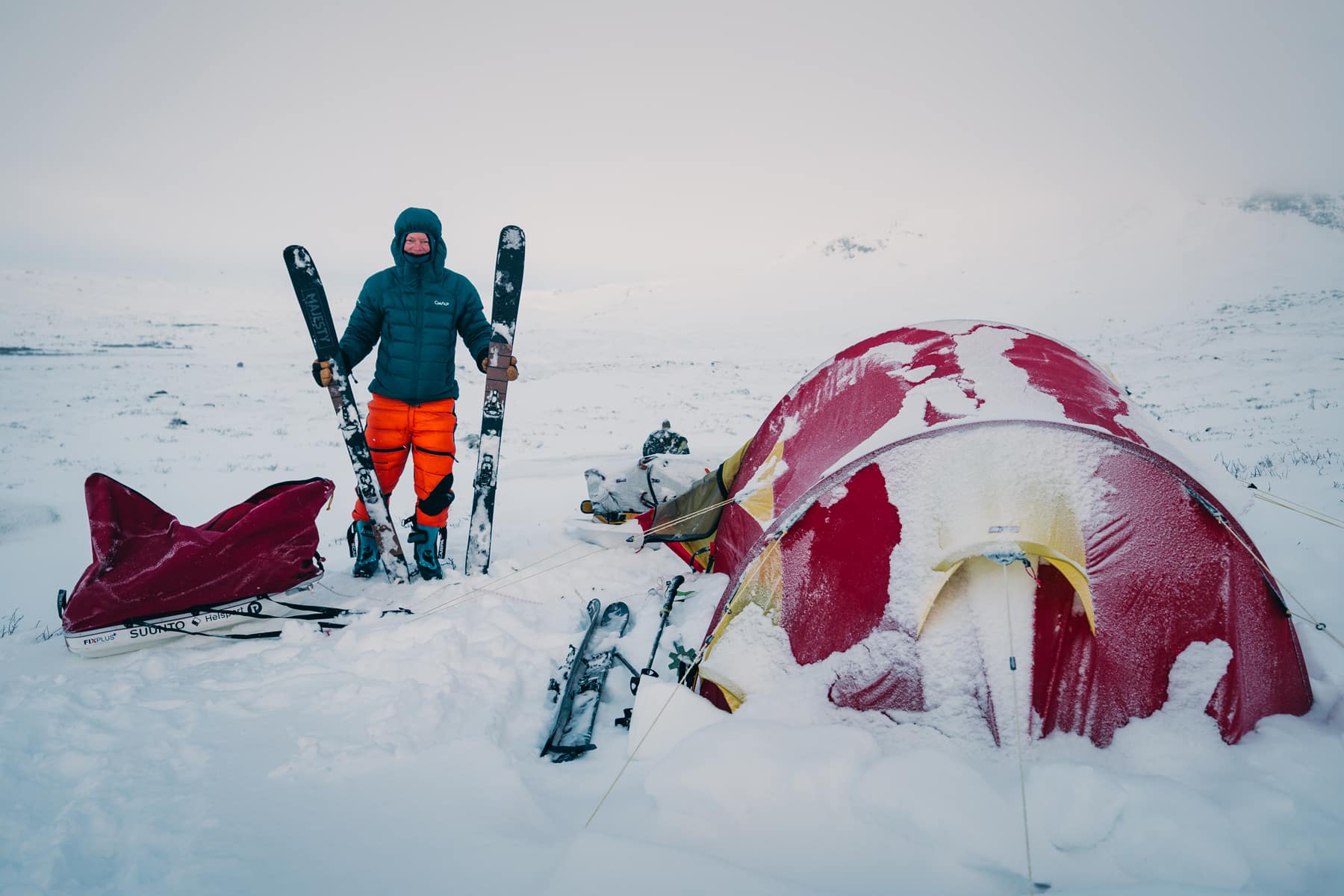
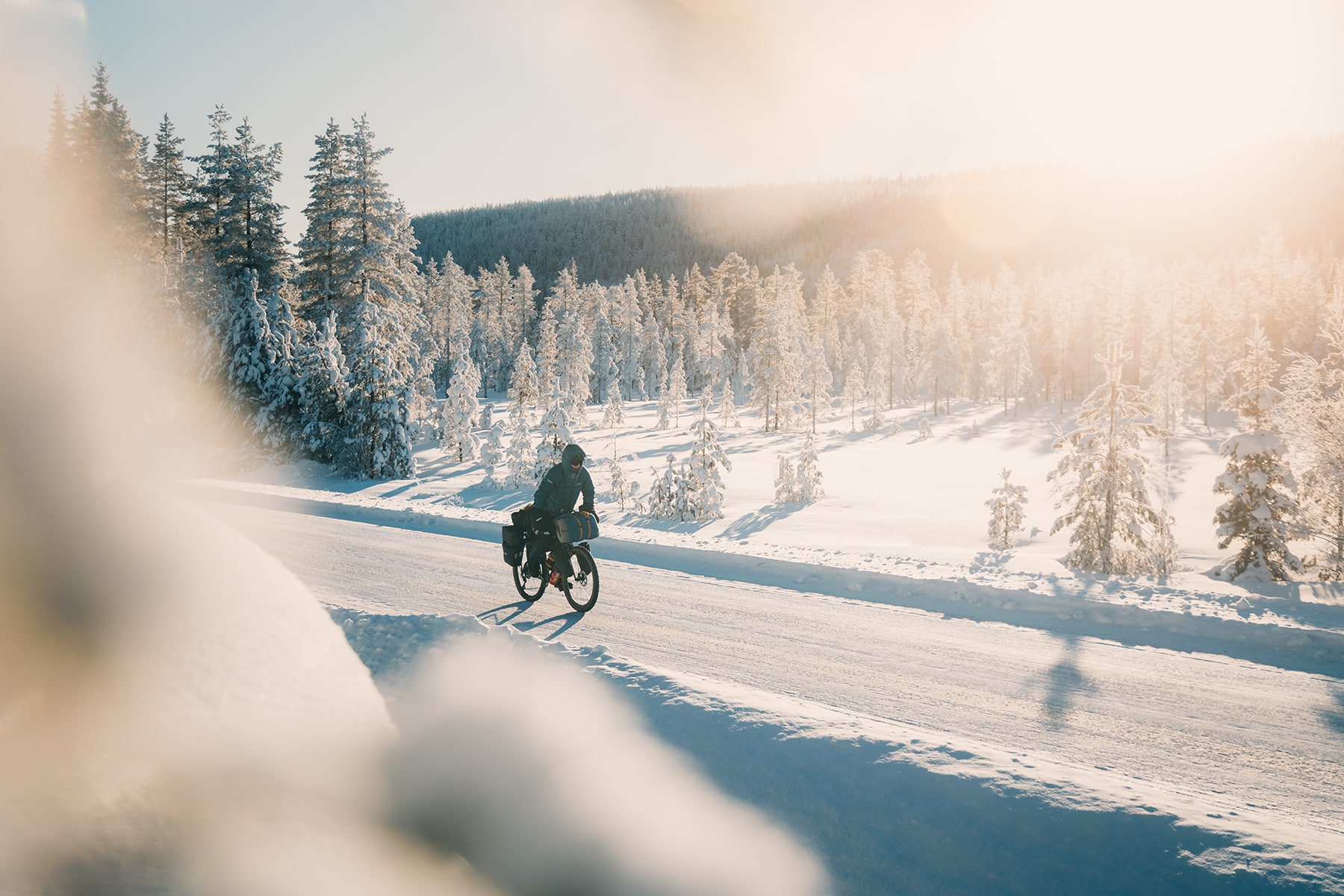
Some adventures unfold in two parts. The first leg of this journey through Sweden covers nearly 900 kilometres by bike in the bitter cold, between Östersund and Luleå. Sixteen days of pedalling through white silence, with nights in a tent at -30°C and days that rarely climb above -20°CA routine quickly sets in. Wake up around 8am, set off at 9:30am, roughly 50 kilometres a day. A deliberately steady pace, leaving time to take photos, manage the cold, and soak in the landscape. Each day ends the same way: find a spot to pitch the tent, melt snow for drinking and cooking, then settle into the sleeping bag before the temperature drops even further.
The cold makes its own rules. One night, the thermometer falls to -30°C. My sleeping bag starts to absorb moisture and freeze. I had left my VBL bag in France, the liner you sleep inside to prevent perspiration from migrating into the insulation. I improvise with a large bin bag found in a shop. Not comfortable, but enough to limit the damage. In these conditions, every gear mistake has an immediate cost. During the day, the discipline is the same: never break into a sweat, protect the batteries, don’t linger when you stop.
There are also the encounters, which bring an unexpected balance. Tim, met when I’m stranded by a closed pass, invites me to his home, offers me a meal and suggests crossing the pass by snowmobile the next day. Johnny, met by the roadside, opens his cabin for the night. These moments weave naturally into the journey, just like the kilometres themselves.
Visually, it is relentless. Snow-laden fir forests, frozen lakes stretching as far as the eye can see, the raking light of the far north. Hours without crossing a soul, in an almost total silence, broken only by the sound of tyres on snow.
After sixteen days, Luleå marks the end of this first chapter. Sleeping bag dried, batteries charged, legs well broken in. On to Kiruna by train, to meet up with Agnès and tackle what comes next: the Kungsleden.
The Kungsleden as a Playground
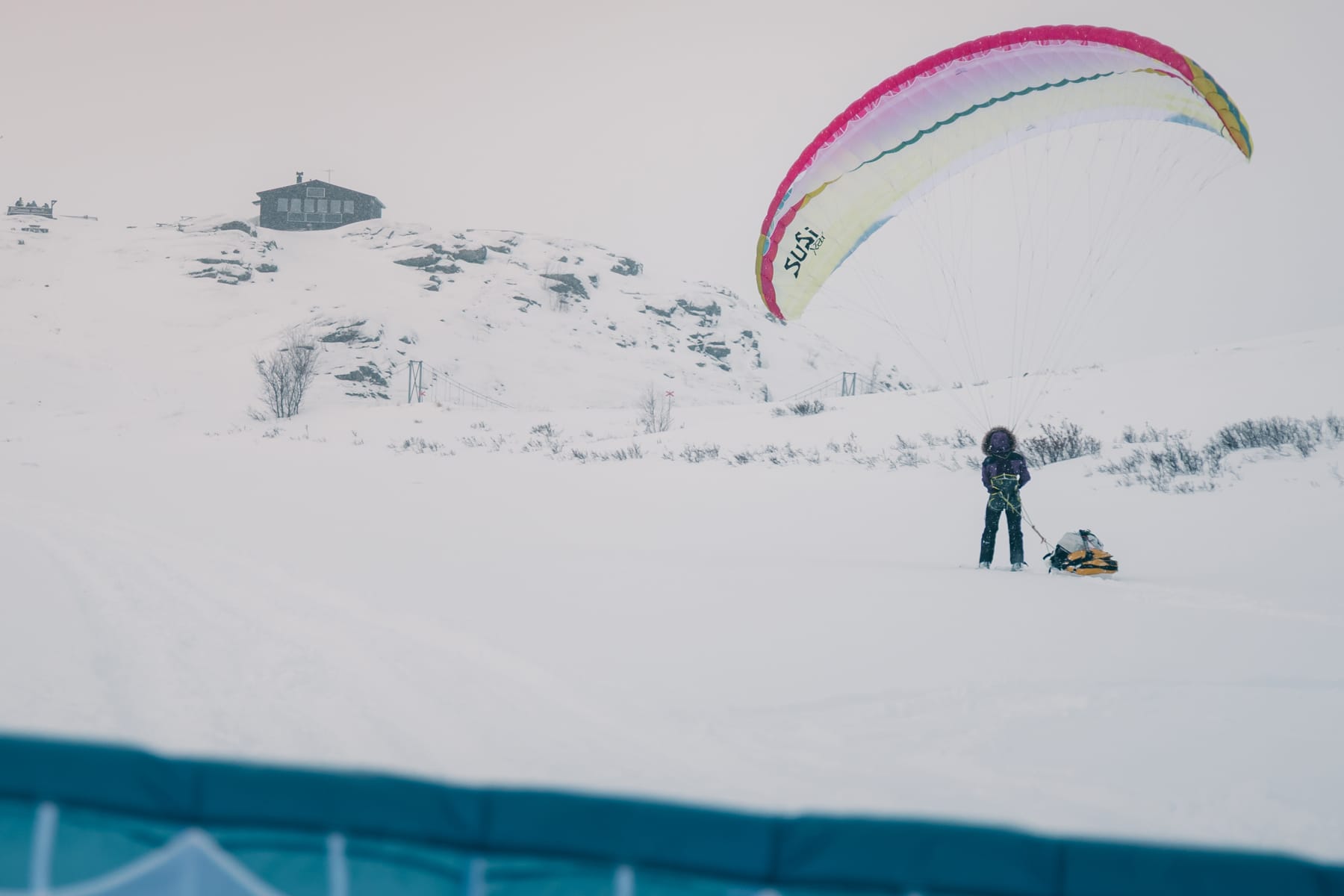
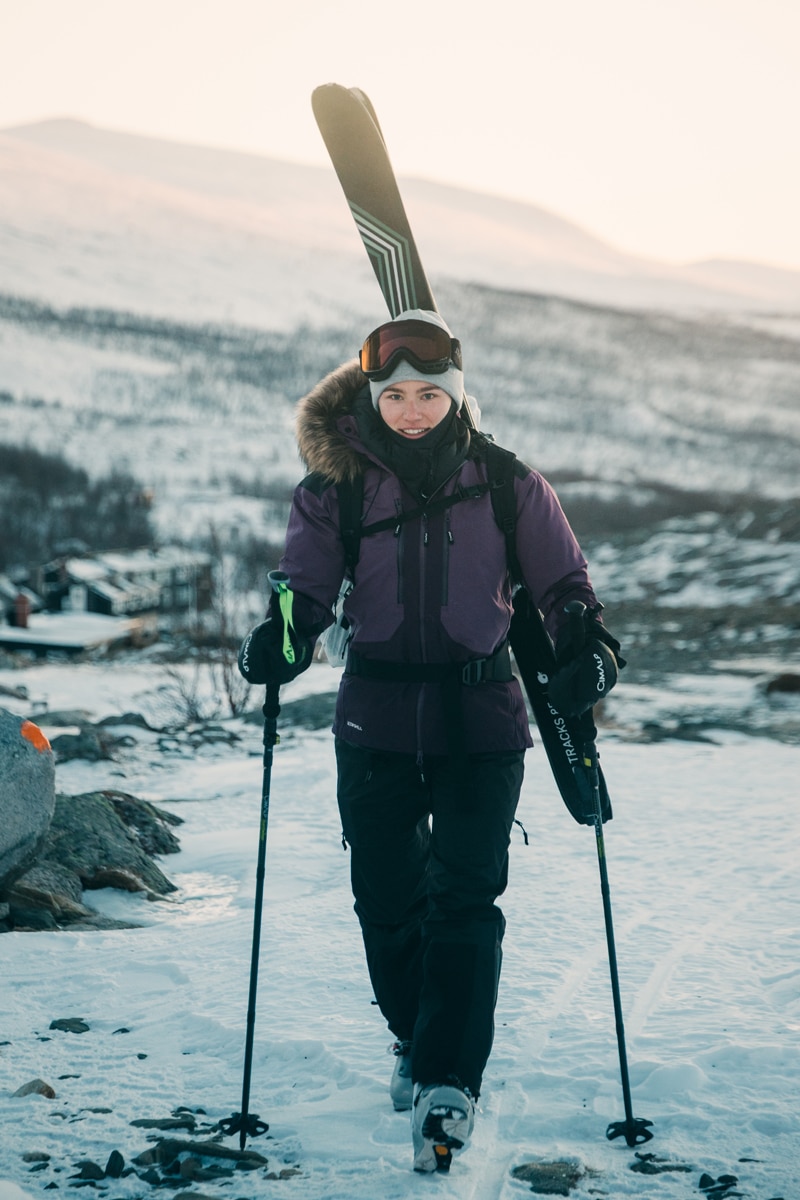
The plan is straightforward: link Nikkaluokta to Abisko, roughly 110 kilometres along the Kungsleden, by ski pulka, with paragliding whenever conditions allow. Gear choice is central. We set off with AirDesign Susi XPed wings and Slip 2 harnesses, designed for exactly this kind of use: light, compact and suited to mountain flying.
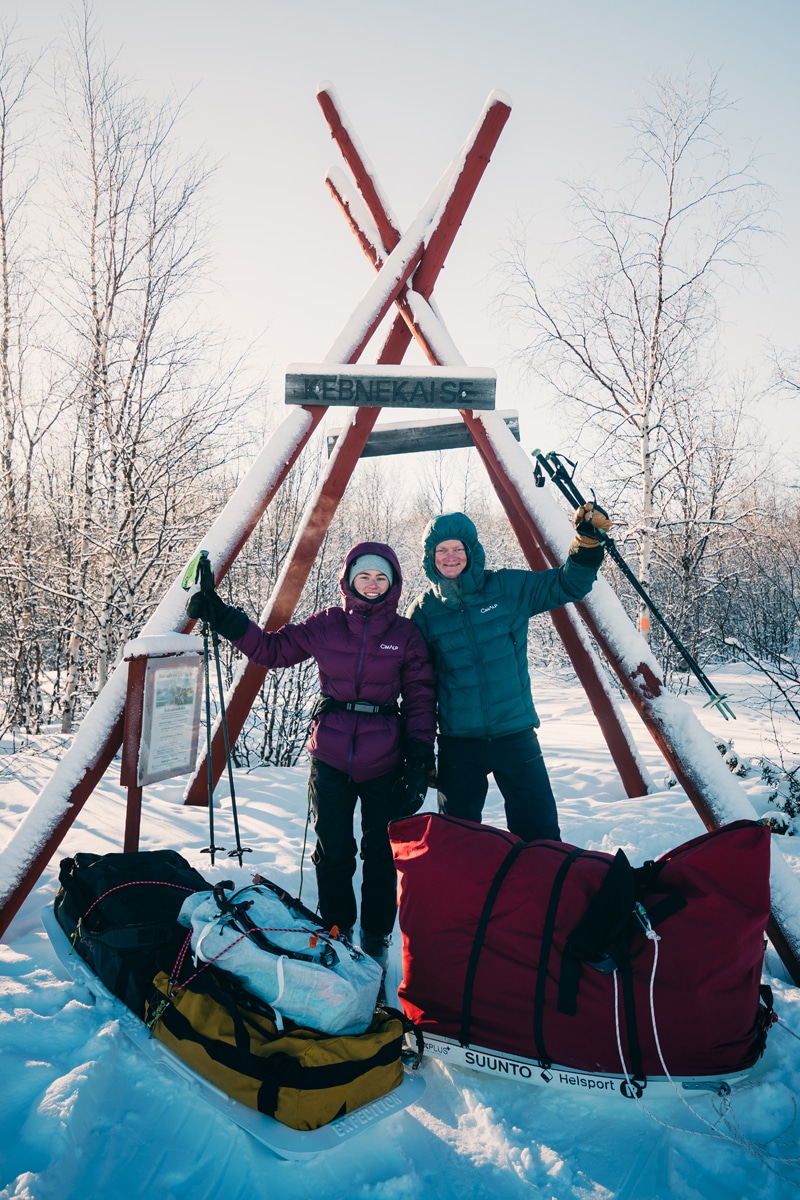
The first few days are about finding the rhythm of ski pulka. The distances are short, 8 to 12 kilometres, but the effort is constant. After two days, we reach the Kebnekaise station: a hut, a sauna, dry gear. Pure luxury.
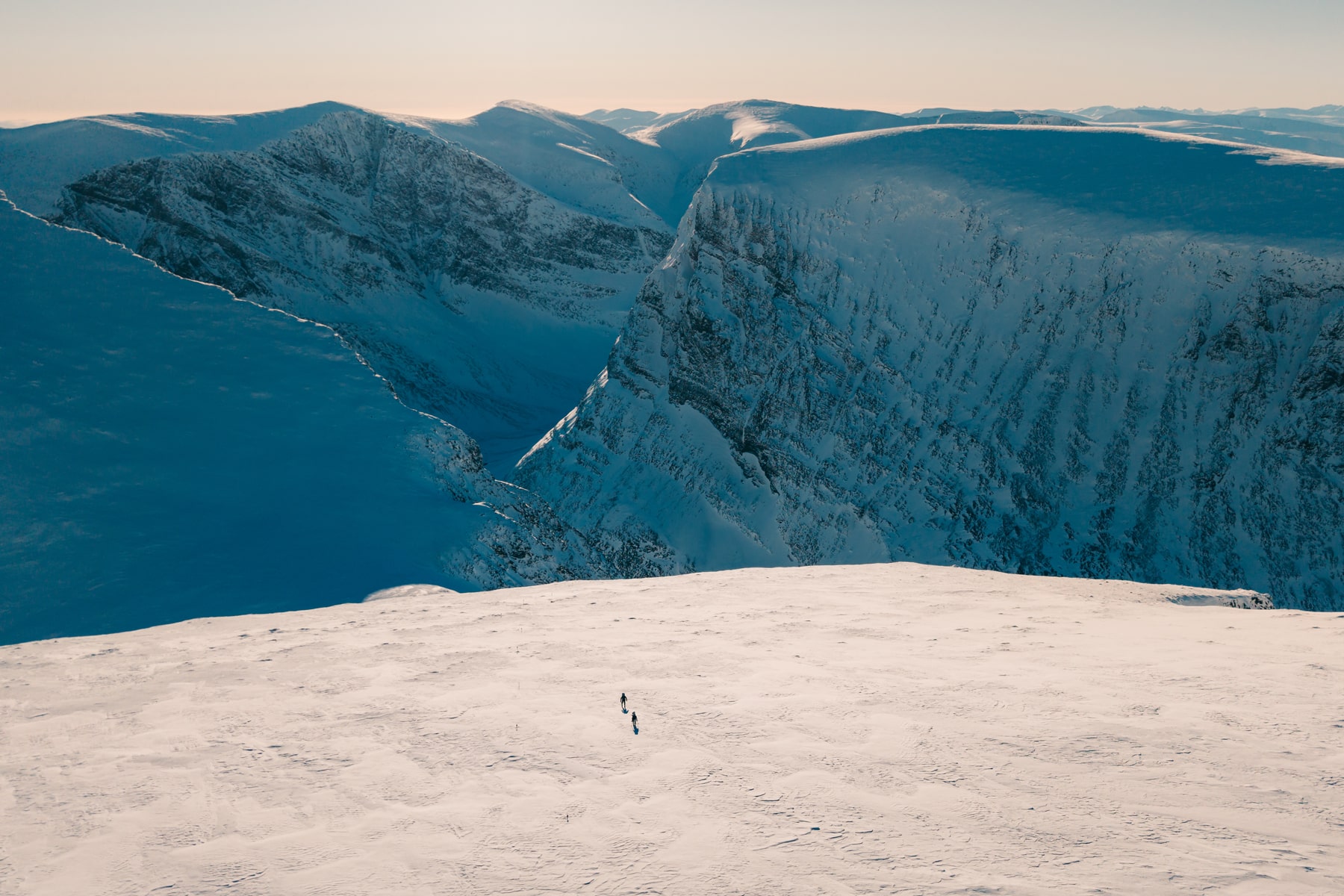
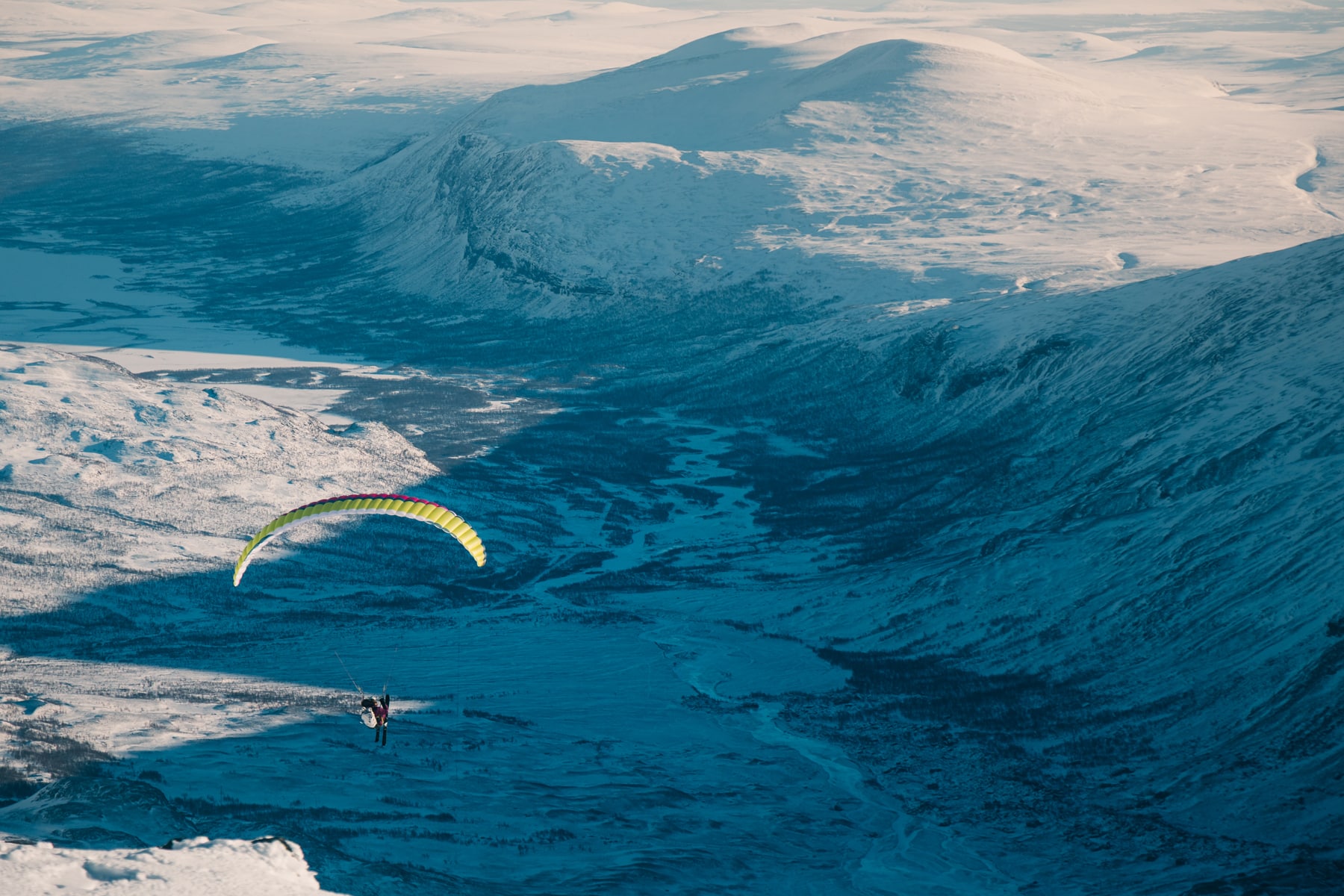
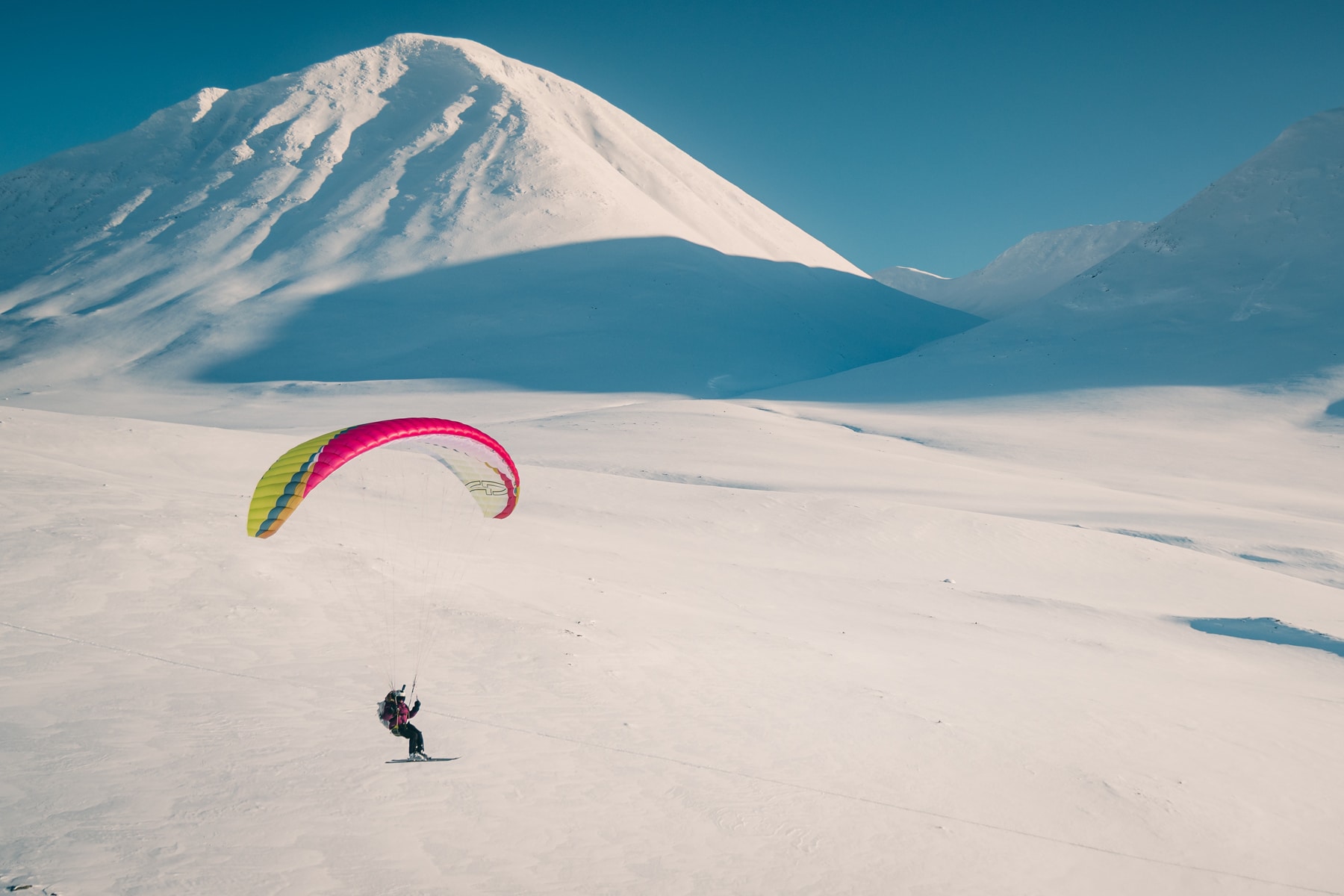
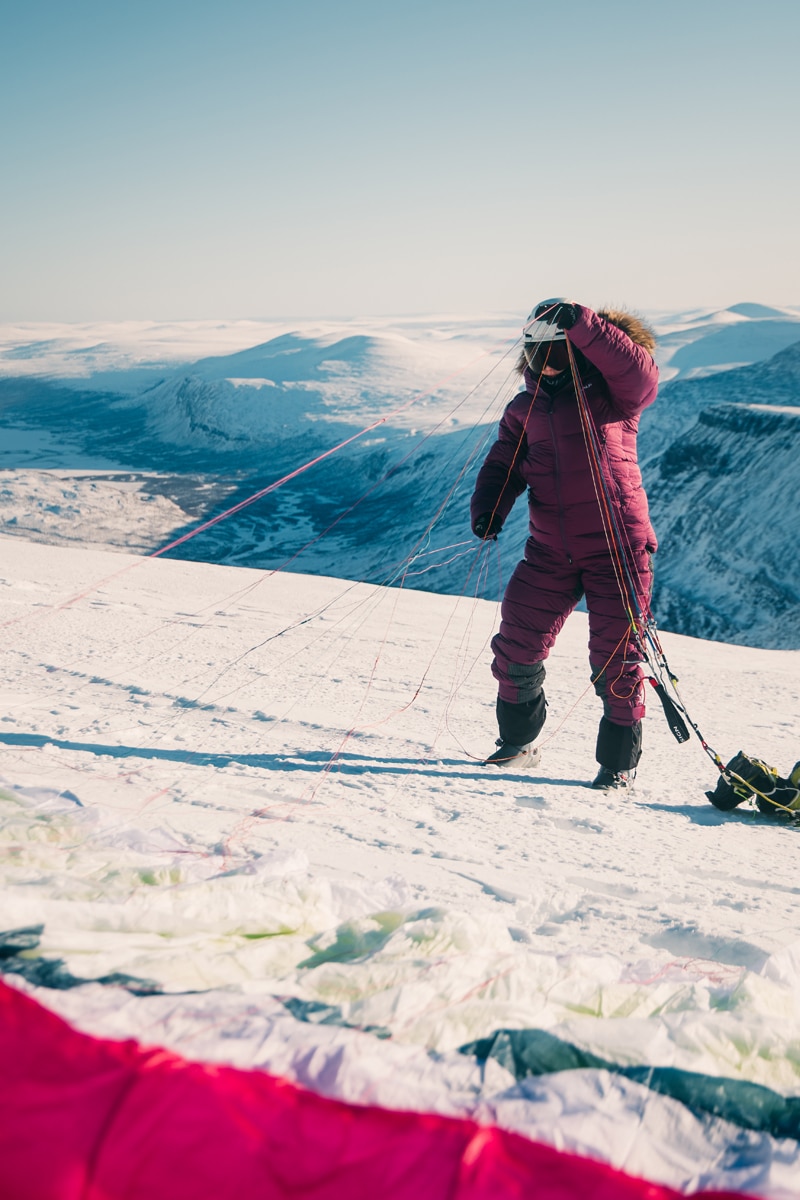
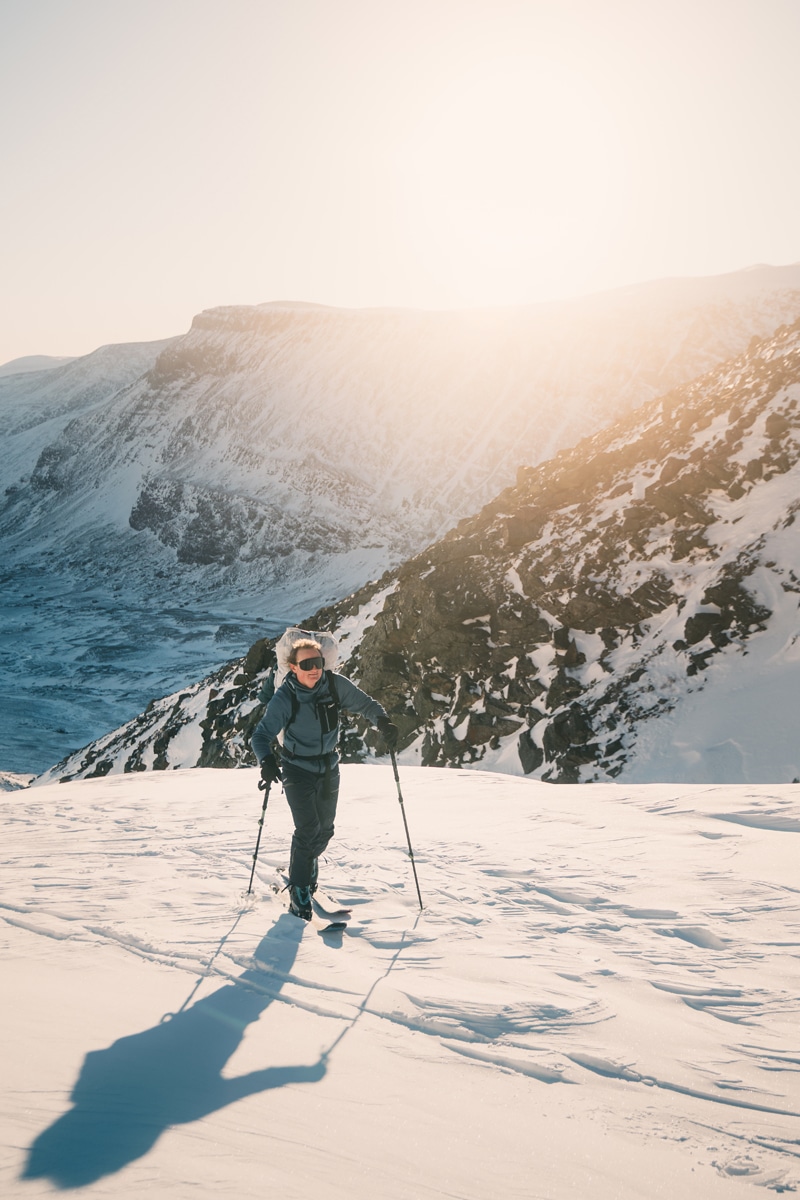
The next day, we head towards Kebnekaise, the highest peak in Sweden, hoping to launch from the top. Snow conditions and the terrain profile lead us to stop at the first summit, Vierranvarri, after around 1,000 metres of elevation gain. It’s a deliberate call: conditions here are perfect for flying, and that is the heart of the project. Agnès launches first. Then it’s my turn: thick gloves, two down jackets, neck gaiter, goggles, so many layers that reading the wing feels less instinctive. I miss my first launch attempt. I climb back up, take the time to readjust everything, and swap to thinner gloves. The Susi XPed rises, the skis glide and we’re off. The air is calm, the view is stunning, and that first flight becomes one of the defining moments of the entire trip. Barely back at camp, we follow it up with a second flight at sunset from a summit close to our hut.
The rest of the route organises itself around the same logic: move forward, watch the conditions, and fly whenever possible. Some days don’t allow it, wind too strong, wrong orientation, poor visibility. We push on then, pulling our pulkas on skis or harnessing the wind for ski kiting across the lakes. On other days, everything falls into place. We leave the pulkas on the trail, head up on touring skis with the paragliders, and string together descents on the fly. Several rotations in a single day, making the most of the conditions.
The Sälka valley becomes a focal point of the trip. We stay there for several days, alternating ski touring, kiting and flights. Gentle relief, good orientations, quality snow, one of the most complete spots on the route.
Towards the end of the route, the wind picks up significantly. Conditions are no longer suitable for flying, but ideal for kiting. Several lakes crossed with winds between 50 and 60 km/h, pulled by the wings, pulka in tow. Speeds topping 40 km/h, in a completely open environment. In those moments, the pulka almost becomes a safety anchor.
The final kilometres wind through the Abisko national park, with one last bivouac a few kilometres from the finish line. In total: 14 days on the Kungsleden, around ten flights, memories filling both our heads and our memory cards, and a film to come.
Joffrey and Agnès